
Projects
Science Communication and Teaching (Selective)
Beyond research, I develop interactive demonstrators and teaching tools that make the inner workings of machine learning tangible for students, practitioners, and the wider public. Each of the tools below is hands-on and freely accessible.
DeepViz Toolbox Web
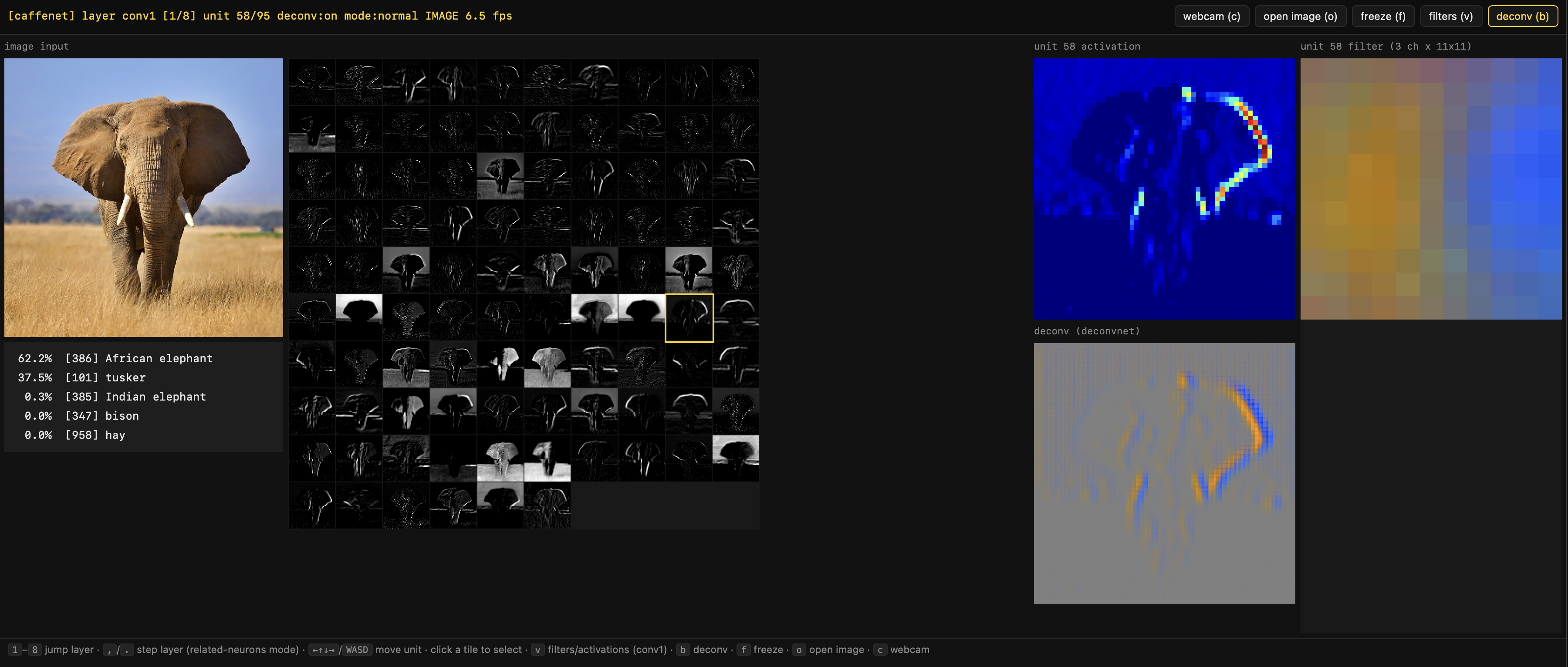
The DeepViz Toolbox Web is an easy-to-use yet effective tool for teaching the inner workings and behavior of convolutional neural networks (CNNs) — entirely in the browser, without any local installation. It is a web-based reimplementation of the Deep Visualization Toolbox by Yosinski et al. (2015), letting users interactively explore how individual neurons respond to an image as it propagates through the network.
Reference (BibTeX)
@inproceedings{Yosinski2015,
  author    = {Jason Yosinski and Jeff Clune and Anh Nguyen and Thomas Fuchs and Hod Lipson},
  title     = {Understanding Neural Networks Through Deep Visualization},
  booktitle = {DL Workshop, ICML' 2015},
  year      = {2015}
}
DeepViz Toolbox (PyTorch)
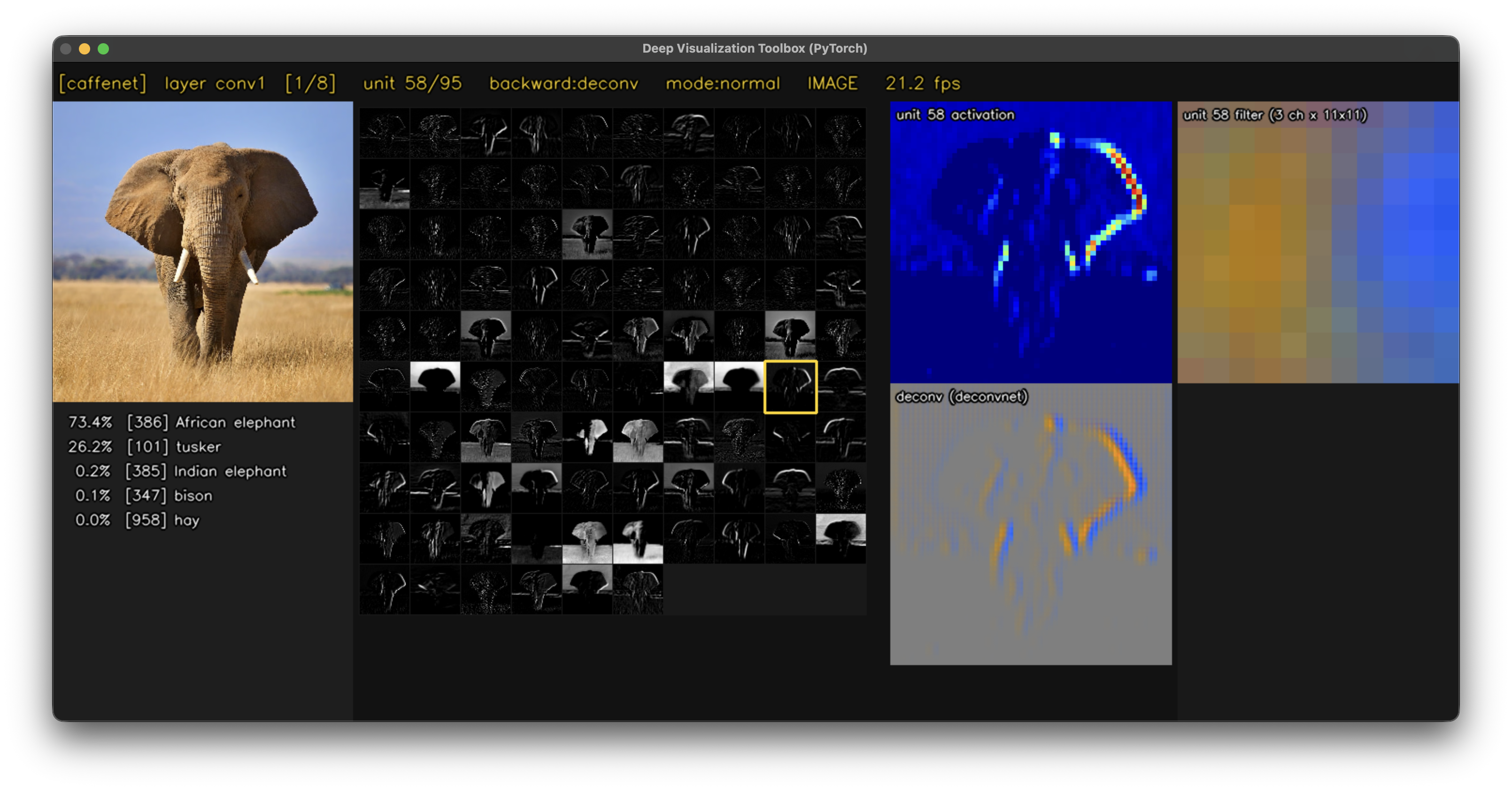
The DeepViz Toolbox (PyTorch) is a modern reimplementation of the Deep Visualization Toolbox by Yosinski et al. (2015) built on PyTorch. It lets users interactively probe convolutional neural networks — inspecting activations, feature maps, and the input patterns that drive individual neurons. Going beyond the web version, it integrates Concept Relevance Propagation (CRP / Concept-LRP; Achtibat et al., 2023) to explain predictions in terms of human-understandable concepts, making the inner workings of CNNs tangible for teaching and research.
References (BibTeX)
@inproceedings{Yosinski2015,
  author    = {Jason Yosinski and Jeff Clune and Anh Nguyen and Thomas Fuchs and Hod Lipson},
  title     = {Understanding Neural Networks Through Deep Visualization},
  booktitle = {DL Workshop, ICML' 2015},
  year      = {2015}
}

@inproceedings{Zeiler2014,
  author    = {Matthew D. Zeiler and Rob Fergus},
  title     = {Visualizing and Understanding Convolutional Networks},
  booktitle = {ECCV 2014},
  year      = {2014}
}

@article{Achtibat2023,
  author  = {Reduan Achtibat and Maximilian Dreyer and Ilona Eisenbraun and Sebastian Bosse and Thomas Wiegand and Wojciech Samek and Sebastian Lapuschkin},
  title   = {From attribution maps to human-understandable explanations through Concept Relevance Propagation},
  journal = {Nature Machine Intelligence},
  volume  = {5},
  pages   = {1006--1019},
  year    = {2023}
}
DeepViz Toolbox (Time Series)
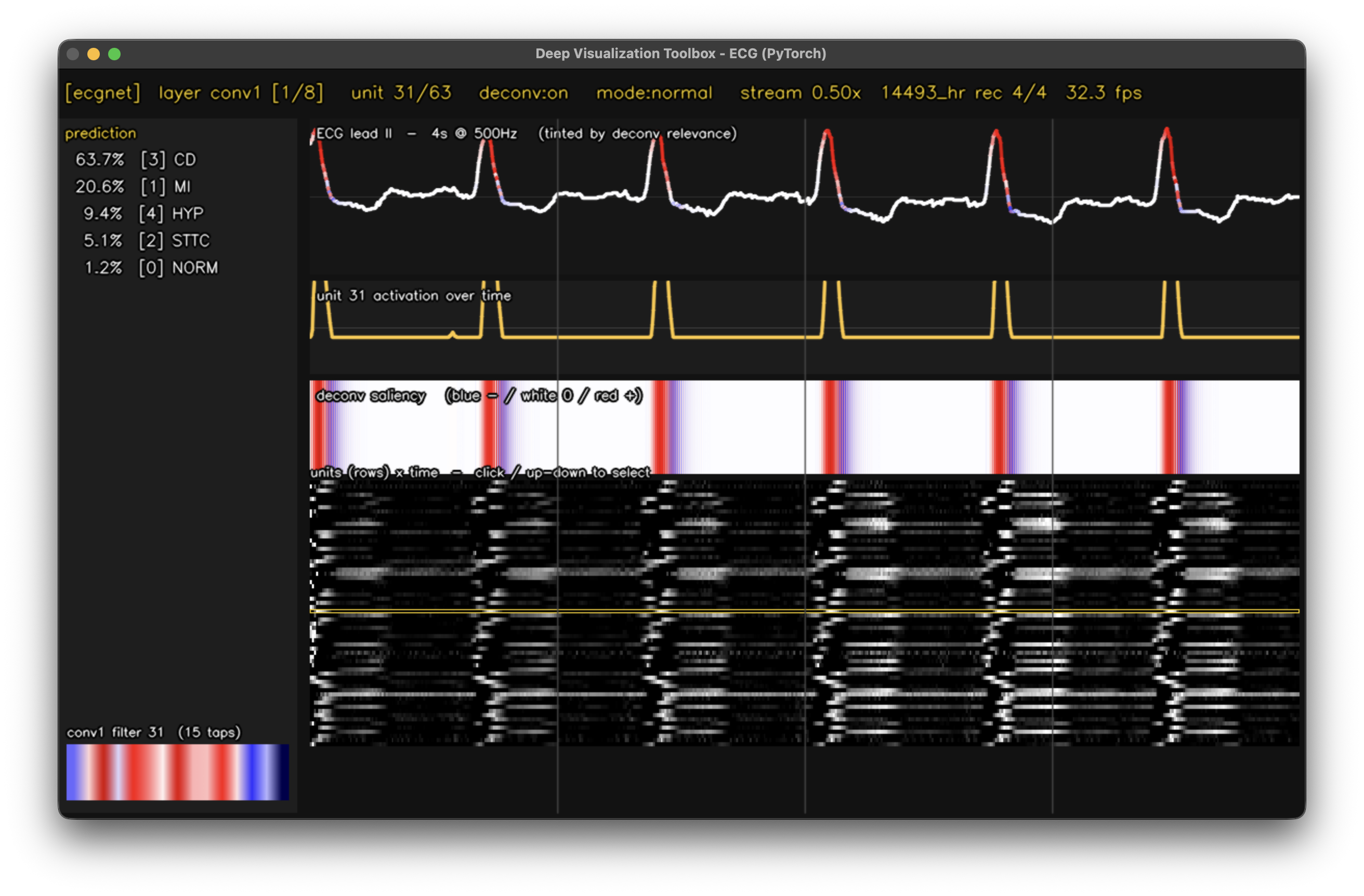
The DeepViz Toolbox (Time Series) adapts the Deep Visualization Toolbox concept (Yosinski et al., 2015) to one-dimensional, time-series data, focusing on ECG signals from the PTB-XL dataset (Wagner et al., 2020). It lets users explore how a CNN processes sequential signals — visualizing activations and the temporal patterns that most strongly influence the network — and, like the PyTorch version, integrates Concept Relevance Propagation (CRP / Concept-LRP; Achtibat et al., 2023) to explain predictions in terms of human-understandable concepts, bringing these explainability techniques to the clinical time-series domain.
References (BibTeX)
@inproceedings{Yosinski2015,
  author    = {Jason Yosinski and Jeff Clune and Anh Nguyen and Thomas Fuchs and Hod Lipson},
  title     = {Understanding Neural Networks Through Deep Visualization},
  booktitle = {DL Workshop, ICML' 2015},
  year      = {2015}
}

@inproceedings{Zeiler2014,
  author    = {Matthew D. Zeiler and Rob Fergus},
  title     = {Visualizing and Understanding Convolutional Networks},
  booktitle = {ECCV 2014},
  year      = {2014}
}

@article{Wagner2020,
  author  = {Patrick Wagner and Nils Strodthoff and Ralf-Dieter Bousseljot and Dieter Kreiseler and Fatima I. Lunze and Wojciech Samek and Tobias Schaeffter},
  title   = {{PTB-XL}, a large publicly available electrocardiography dataset},
  journal = {Scientific Data},
  volume  = {7},
  number  = {1},
  pages   = {154},
  year    = {2020}
}

@article{Achtibat2023,
  author  = {Reduan Achtibat and Maximilian Dreyer and Ilona Eisenbraun and Sebastian Bosse and Thomas Wiegand and Wojciech Samek and Sebastian Lapuschkin},
  title   = {From attribution maps to human-understandable explanations through Concept Relevance Propagation},
  journal = {Nature Machine Intelligence},
  volume  = {5},
  pages   = {1006--1019},
  year    = {2023}
}
3D Neural Network Visualization for Audio Analysis
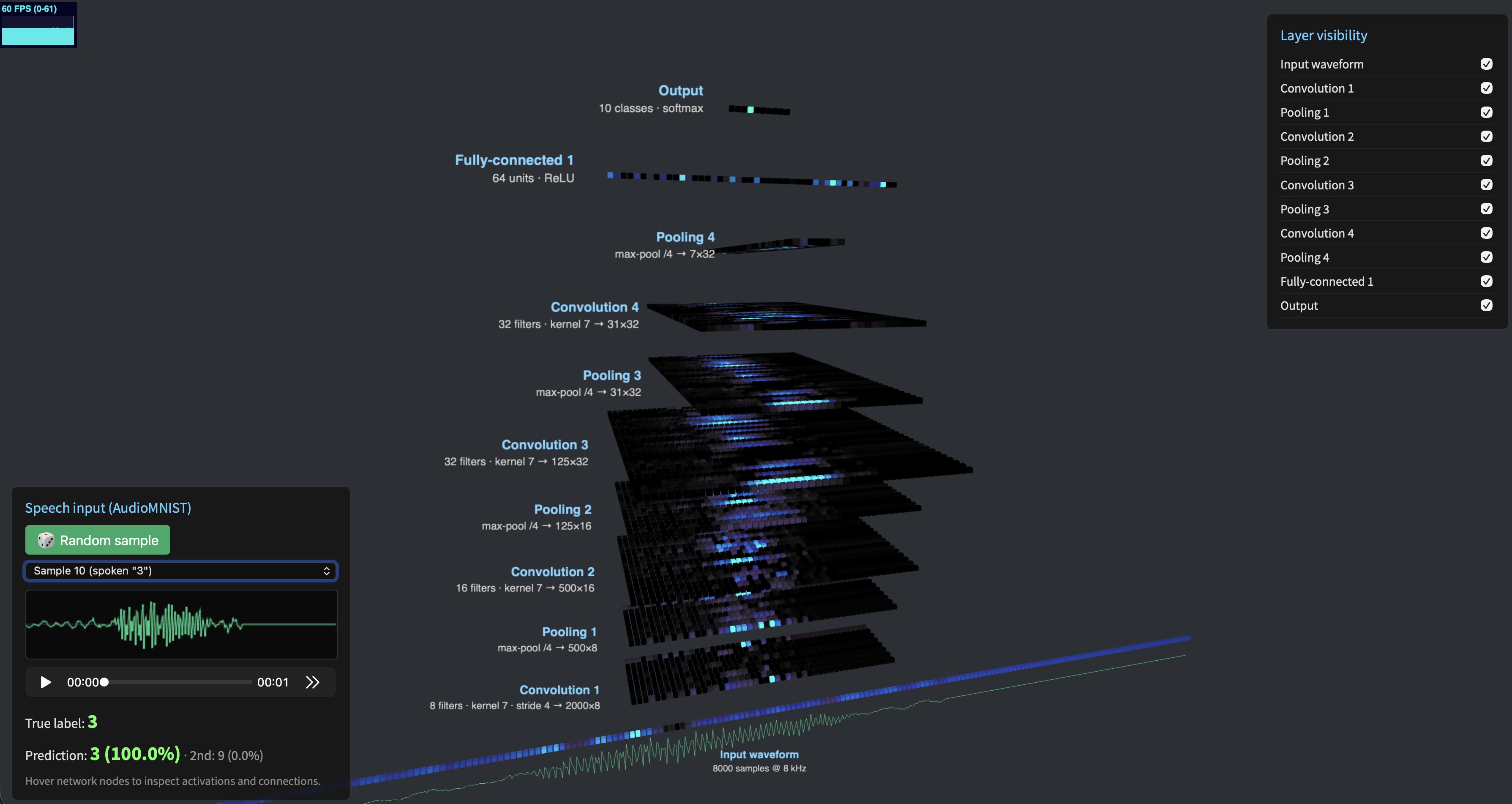
This demonstrator visualizes, in interactive 3D, how a neural network processes audio. Built on the AudioMNIST dataset of spoken digits (Becker et al., 2018), it treats the recordings as time series and uses Grad-CAM (Selvaraju et al., 2020) to highlight which parts of the signal drive the model’s classification — making the otherwise abstract flow of information through the network visible and explorable.
References (BibTeX)
@article{becker-2018-audiomnist,
  author  = {Becker, S{\"o}ren and Ackermann, Marcel and Lapuschkin, Sebastian and M{\"u}ller, Klaus-Robert and Samek, Wojciech},
  title   = {Interpreting and Explaining Deep Neural Networks for Classification of Audio Signals},
  journal = {arXiv preprint arXiv:1807.03418},
  year    = {2018}
}

@inproceedings{harley2015isvc,
  title = {An Interactive Node-Link Visualization of Convolutional Neural Networks},
  author = {Adam W Harley},
  booktitle = {ISVC},
  pages = {867--877},
  year = {2015}
}

@Article{Selvaraju2020,
  author  = {Selvaraju, Ramprasaath R. and Cogswell, Michael and Das, Abhishek and Vedantam, Ramakrishna and Parikh, Devi and Batra, Dhruv},
  title   = {{Grad-CAM}: Visual Explanations from Deep Networks via Gradient-Based Localization},
  journal = {International Journal of Computer Vision},
  volume  = {128},
  number  = {2},
  pages   = {336-359},
  year    = {2020},
  doi     = {10.1007/s11263-019-01228-7}
}
Time Series Pendulum
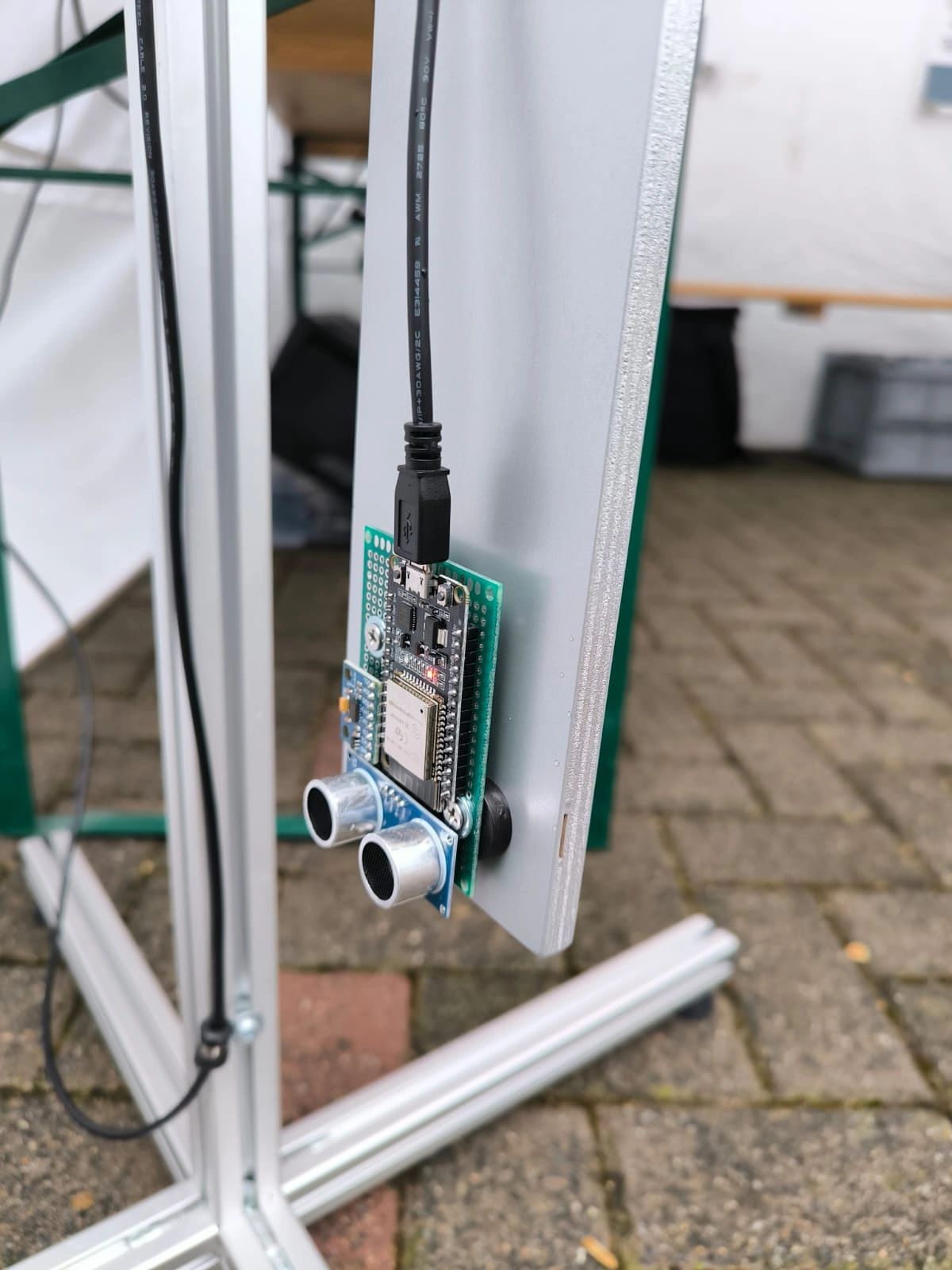
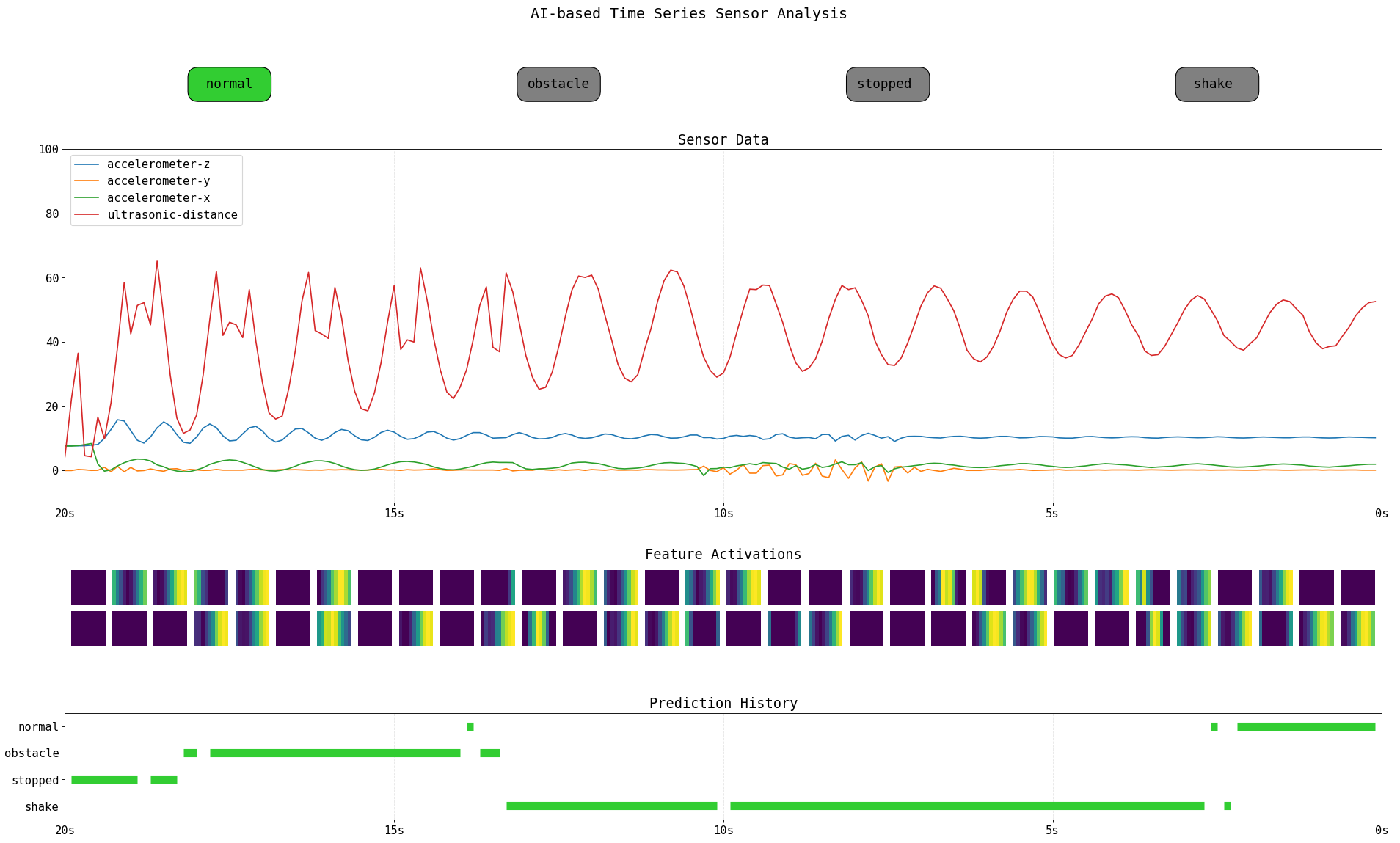
The Time Series Pendulum illustrates the full process of time series generation, recording, and analysis, as found in industrial applications, smart home environments, and wearable devices. A basic 1D CNN showcases the underlying pattern-analysis structures that enable accurate classification of pendulum states. Git repository
YOLO Box
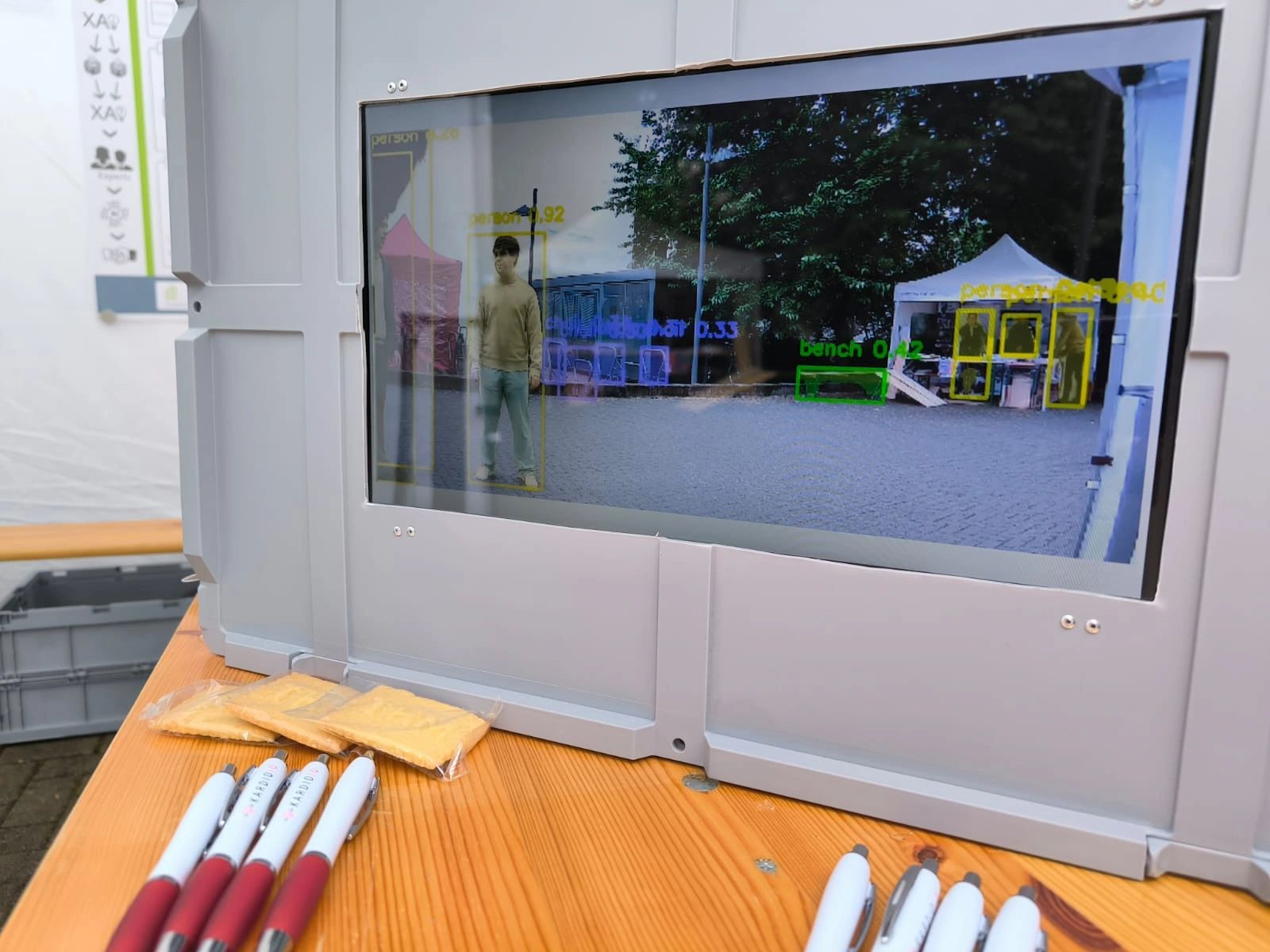
With the YOLO Box, the object detection, segmentation, and classification capabilities of deep learning models can be understood intuitively using live webcam feeds. Git repository
Arduino Board
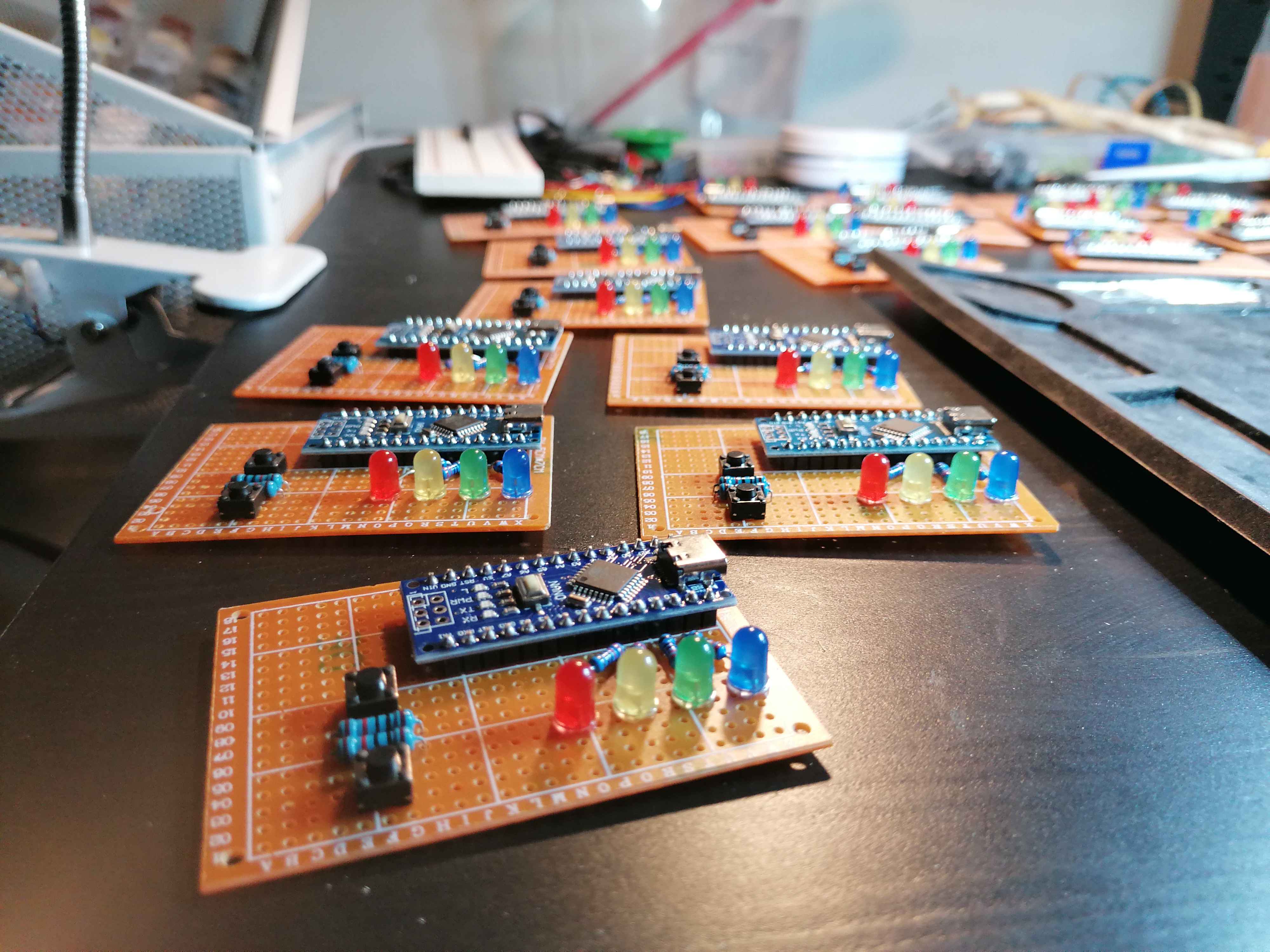
The Arduino Board is used in taught courses such as Operating Systems and Fundamentals of Computer Science. It lets students experience embedded programming and grasp basic computer science principles through hands-on exercises.
Contributions to Research Projects (Selective)
TimeXAI - Explainable Artificial Intelligence for Time Series Classification The TimeXAI project aims to enhance existing and develop novel XAI methods tailored specifically to the domain of time series classification, with strong emphasis on human interpretability of explanations and evaluation thereof. Time series have become primarily important through a growth of sensor-driven applications, but existing explainability methods are largely underdeveloped in this domain. TimeXAI aims to bridge this gap by testing and combining strengths of existing methods and co-creating new ones tailored to domains like cardiology and smart home monitoring. A central goal of the research conducted in this junior research group is the evaluation of XAI quality through eye-tracking studies with domain experts. Learn more
Time frame: 09/2024 - 08/2027
Funding: ExperTeam4KI, Federal Ministry of Research, Technology and Space (01IS24063)
Lead: Prof. Dr. Jennifer Hannig (Technische Hochschule Mittelhessen)
My role: As a postdoctoral researcher, I guide the research and development of time series XAI techniques, supervise PhD students, and support in designing appropriate evaluation strategies.
SUSTAIN‑AI ECG / ECG4Africa.org - AI‑Enhanced ECG Diagnostics for Africa As a collaboration lead by MI4People, this project aims to deploy AI‑powered ECG analysis tools in regions with limited access to cardiology expertise, starting in Ethiopia, where cardiovascular disease is highly prevalent and local diagnostics are scarce. The focus lies on developing interpretable models to detect cardiac anomalies using 12‑lead ECGs, optimizing them for deployment in resource‑limited clinical settings and establishing an african dataset for fine-tuning AI models for ECG analysis. Learn more
Time frame: 01/2025 - ongoing
Funding: Fundraising, supported by Bavarian State Chancellery, Armauer Hansen Research Institute and Technische Hochschule Mittelhessen
Lead: MI4People gGmbH
My role: Development and training of AI models, for diagnostic analysis, integration of explainability methods, practical evaluation under field‑testing conditions, full-stack development of web application.
X4Neuro - XAI for Digital Neuropathology
Meningiomas are traditionally analyzed through complex laboratory analysis. The X4Neuro project aims to extend an existing AI model for epigenetic classification of digitized histopathological slides with explainable AI techniques. The goal is to identify and visualize the cellular- or pixel-level regions that are most relevant to the model’s decision, thereby increasing clinical interpretability and trust. Learn more
Time frame: 10/2024 - 03/2026
Funding: Hessian Ministry of Science and Research, “Experimentierräume”
Lead: Justus-Liebig-University of Giessen, Technische Hochschule Mittelhessen
My role: Development and training of the classification model, integration of XAI methods for pixel-level heatmaps, and evaluation of interpretability in practical pathology settings.
BPEAX - AI-based detection of exaggerated blood pressure response to exercise based on central blood pressure estimates and ECG data The research objective of BPEAX is the development of an artificial neural network for the prediction of exercise-induced hypertension in people with normal resting blood pressure values based on ECG data and/or central blood pressure curves. Learn more
Time frame: 05/2024 - 10/2025
Funding: Hessian Ministry of Science and Research, “Experimentierräume”
Lead: Technische Hochschule Mittelhessen, Justus-Liebig-University of Giessen
My role: Guidance of AI model development and application, XAI-based analysis and interpretation of model behavior and pattern usage in blood pressure curves.
HERMIQS - Heart Emergency Rescue Management IQ System
HERMIQS aims to improve emergency response workflows for cardiac incidents through intelligent systems. The project develops real-time, AI-powered tools to assist paramedics and physicians during pre-hospital and early in-hospital care. Key research areas include the integration of wearable sensor data, decision support under time-critical conditions, and explainability of AI outputs in emergency contexts. The project explores how trustworthy AI can contribute to faster, more accurate diagnosis and better patient outcomes during the so-called “golden hour” of cardiac emergencies. Learn more
Time frame: 10/2022 - 09/2025
Funding: Distr@l 2A, Hessian Ministry of Digitalization and Innovation
Lead: CRS medical GmbH, Technische Hochschule Mittelhessen, Justus-Liebig-University of Giessen
My role: Development and training of AI models for real-time analysis, integration of explainability methods, and evaluation of model performance in emergency decision-making scenarios.
RisKa - Risk Stratification in Cardiology Using AI
The RisKa project focuses on developing advanced AI models to enable early and individualized risk stratification in cardiology. The goal is to analyze ECG signals alongside clinical parameters to identify patients at elevated risk of severe cardiac events such as sudden cardiac arrest or worsening heart failure. Research emphasis includes interpretable deep learning methods that clinicians can trust, bridging the gap between algorithmic performance and real-world applicability. The project is interdisciplinary, involving experts in cardiology, data science, and explainable AI (XAI). Learn more
Time frame: 05/2022 - 04/2024
Funding: Distr@l 4A, Hessian Ministry of Digitalization and Innovation
Lead: Technische Hochschule Mittelhessen, Justus-Liebig-University of Giessen
My role: Development and training of AI models, implementation of explainability methods, and practical evaluation of the approaches in clinical contexts.